
Fun with p i m
p i m, Giuliani RH study no. 2. One of the most basic arpeggios, and easy to master.
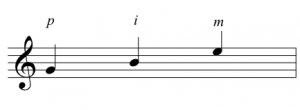
Here’s two ways to make it more exciting.
- Start with different fingers. This shifts the accent and completely changes the feel of the arpeggio. It’s strangely challenging even though it seems very basic.
- Put fingers on the same string. This requires more precise sequential planting to get a good sound. In some cases (the last one), it’s very awkward, and one of those instances where you take something further than needed to the original feels easier.
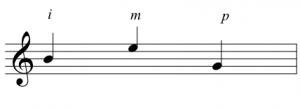
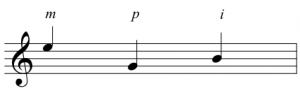
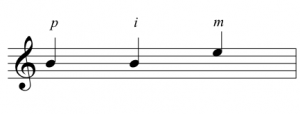
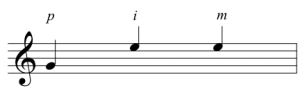
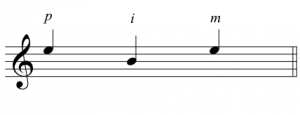
These two methods of varying p i m can be applied to any arpeggio.