
James Piorkowski Interview
James Piorkowski is a performer and composer based in New York. He has toured internationally as a soloist and chamber musician, and has recorded several albums. In addition to his performance activities, James is an active teacher and runs the SUNY Fredonia guitar program. Connect with James on Youtube.
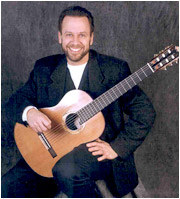
James Piorkowski: I started my musical journey by playing the accordion when I was 4 years old, with my oldest brother (a superb musician) serving as my teacher. When I eventually saw the Beatles on the Ed Sullivan TV Show , I then knew that the guitar was for me. My brother found an old steel string cowboy guitar for me, and I started learning popular music at his music store, with one of his staff teachers. I was 12 years old. I did the rock/pop/jazz explorations before the classical guitar beckoned, and it eventually gained a dominant place in my musical world.
CGB: Do you still play the accordion?
James Piorkowski: No, I haven’t picked it up since I was a boy, but my oldest brother who taught me still plays professionally, and he still plays very well.
CGB Do you have any tips for the aspiring guitar composers or arrangers?
James Piorkowski: Learn the nuts and bolts as well as the craft: theory, harmony, comp sets, basic attack modules, etc., from knowledgeable people. Only then will your imagination have rails to travel upon. Listen to the music that moves your emotions and spirit, in whatever genre you find it, and then figure out what made that piece succeed in that way. Steal those “formulas”, but not the actual notes!
CGB: What have you learned about composing for the guitar that you wish you’d have known when first started?
James Piorkowski: That the composition doesn’t have be really difficult to perform to be musically effective.
CGB: What goes into a published piece of music? Is there a back and forth with the publishing company? Do you have to do all the typesetting yourself?
James Piorkowski: When working with a publisher, they each can have different criteria once our your piece is accepted. Some will accept any legible manuscript, but having the score set in some software program like Finale or Sibelius is very helpful for all involved. It’s a great skill (music notation software) for a composer to attain, because these programs are powerful tools that, when learned, can truly assist in the composing process. I have used Finale for many years, and present my works in that format for publishing. I also like the control that it gives me when preparing the manuscript.
CGB: Do your compositions often make it to recording first, then to publication?
James Piorkowski: It has worked both ways for me, but I like to make at least a decent demo recording for the publisher to hear when I make a pitch for a new score to be considered.
CGB: How exactly does one pitch a piece to a publishing company? What is the process to get published?
James Piorkowski: In my situation, it’s been the case of the right person liking my music. For example, I sent a recording and score of Leaping and Dancing for Joy, a work of mine for two guitars, to Sergio Assad. I asked him if the duo would consider playing the piece. His reply was, “I like the piece. Would you consider having me publish it through Editions Lemoine?” Well, when a member of the most famous guitar duo in the world wants to publish your guitar duet, that makes the process very easy, right? Of course I said yes. So most importantly, your music must have strong appeal to whomever makes these decisions. The hardest part may be getting that certain person to listen to your music, but if you really believe in it, send it off!
CGB: Tell us a bit about your recordings.
James Piorkowski: My philosophy about making recordings is based on this important question, … “Why?” What I mean is, what is the purpose of this project?
I wonder if the world needs another recorded version of Bach on guitar, or Albeniz, etc. My answer is, honestly, “I don’t think so”. There are enough really nice renditions already recorded by great players. The recordings that I have done post – Buffalo Guitar Quartet – have focused on presenting unique guitar repertoire for solo and/or chamber settings. But even with the BGQ, I commissioned, wrote and begged for new works for guitar quartet. In fact, we put out the very first recording of new music for four guitars in history (more information). I have to be honest and say that I’m really pleased about that, because it is a good album and it was a milestone recording.
My more recent recordings feature solo and chamber works by William Ortiz, Puerto Rico’s most prolific composer ever (he writes a lot for everything!), and also my own compositions. Freedom Flight and Sentient Music, both on Centaur Records, are two of my cds that represent what I like to play.
CGB: What is it like to tour and perform internationally?
James Piorkowski: First of all, it’s really special to be asked to share my music with any audience, and even more so when my compositions are heard across international borders. I’m deeply pleased when audiences from other nations and cultures show appreciation and support for my music. This encourages me to continue to write. Once again, I bear witness that music truly is an international language. How do you deal with all the travel? You have to learn to pace yourself, to save your energy for rehearsing and performing, while taking some time to see attractions in other places. I have found , though, that meeting people from around the world is always the most special thing about traveling. I now have friends – very dear friends – in South America, Europe, the Caribbean, and elsewhere.
CGB: How do you get your guitar around?
James Piorkowski: When I was in the Buffalo Guitar Quartet, we rarely were allowed to bring four guitars on board in an airplane, so we used very strong (but a bit too heavy) travel cases that we could confidently check with our baggage. When I travel now with one guitar, my case is pretty compact and light, (but still strong enough to gate-check if I have to), so I am almost always able to fit it in the overhead compartment of an airplane.
CGB: Can you tell us a bit about what instrument(s), strings and other accessories you use? And why?
James Piorkowski: I play a spruce top “Wedge” model by Jim Holler, (photos), who makes guitars in Jamestown, NY, which is close to Fredonia. I’ve played on Jim’s guitars, both cedar and spruce, for many years now, because I like the clarity, sound color, and projection of his instruments.
My current guitar is unusual in that it’s asymmetrical (from soundboard to back). This design creates two strong improvements. Number one, the guitar is narrower from the soundboard to the back at the place where your right arm rests on the guitar. This allows for the ball end of the humerus (in the shoulder) to sit more naturally and comfortably in the glenoid (shoulder socket), which subsequently allows the right arm to relax and function more easily. Jim made the other side of the guitar, (that would rest on your legs), wider between front and back, so that the internal air volume of the guitar body remains the same as a traditional symmetrical model. The second benefit from this design is that now there are a great number of different reflecting distances and angles from soundboard to back. This produces unusual strength and consistency for all of the notes on the guitar, with no weak notes or wolf tones. It is quite remarkable and satisfying to hear.
When Roland Dyens was here in April, he couldn’t stop playing my guitar (we were almost late to the airport – no joke), because he loved the equal strength of notes and loved the clarity of voices. These things are very important to him because he plays highly contrapuntal repertoire. Before he left for Paris, he called Jim and commissioned a virtual copy of mine. I heard Roland play a recital on his new Holler guitar in Toronto in June, and it sounded really beautiful. He has since toured with it in Italy and Greece, and he now claims that the guitar is Parisian :-))
As for strings, I use Oasis GPX normal tension. In my assessment, they blend the strengths of carbon (sustain, power, clarity) with a nylon like warmth and richness. Also, they don’t scratch as easily as other carbon strings that I’ve tried.
CGB: What are you looking for in a prospective guitar student at SUNY Fredonia?
James Piorkowski: Solid training, teachability, good ears, some imagination, sincerity, and a willingness to work countless hours in order to improve.
CGB Tell us a bit about the guitar program at Fredonia.
James Piorkowski: We have, on average, from 22-25 guitar majors in the program at any time. It’s mostly an undergraduate enrollment, but we do offer a master’s degree, mainly in performance, composition, and music education. In addition to private studio lessons, a student will participate in some of the three ensemble offerings that we have for guitar: Guitar Ensemble (about 10-12 members), Chamber Guitar (for guitar and voice, guitar and flute, etc.), and by audition, the Fredonia Guitar Quartet, which recently (May, ’09) did a concert tour of Spain, and has been invited back for 5 more concerts next spring! I was so proud of how they played on this tour.
In the past, I’ve taken my ensembles to perform on concert tours in Romania, Bulgaria, Venezuela, the Czech Republic, Slovakia and in the U.S. We also have exchange programs set up with the Conservatory of Music in Seville, Spain, and with the Institute of Music in Caracas,Venezuela.
CGB: In your teaching, what’s the biggest issue or problem that most incoming guitar undergrad students have to deal with?
James Piorkowski: The lack of proper training, both in technique and in practice/learning skills. I become very frustrated that there are teachers out there that don’t realize what they don’t know, but they continue to improperly guide a student on the classical guitar. A very gifted student can be technically corrupted and consequently frustrated because his or her teacher acted like they knew what they were doing. This drives me nuts!
CGB: How about graduate students?
James Piorkowski: I don’t think that there is any one thread with grad students. At that point, it is more varied.
CGB: Any other tips for the aspiring guitarist?
James Piorkowski: Your aim should be to learn to become a solid musician who plays the guitar very well, and not simply a good guitarist. There is a big difference between the two mindsets and approaches.
CGB: What are your upcoming projects?
James Piorkowski: I have just finished writing a work for cello and guitar, entitled “El Camino a Oviedo”. It was inspired by the scenery when driving northward to Oviedo, Spain, through the majestic Cantabrian Mountains. The premiere performance will be next month. I will then prepare the manuscript for publication.
After many concerts this past spring with Susan Royal. my flute partner, in the U.S., the Caribbean and in Europe, I now will be performing a solo program which feature some of my own works, plus some of Ortiz’s, in the U.S.
Also, I have enough new compositions of mine to record another cd, so I have to start organizing that project.
Furthermore, I plan to prepare some older, unpublished works of mine for future publication, which guitarists have been asking for. I have to find the time for that project, though, and hopefully soon.
Stephen
Wow I am amazed that no comments have been added to this post before. James has a very interesting beginnings in the guitar world and the influence of his brother certainly gave him the inspiration to start playing, but when did he start composing and what inspired him in that direction?
I wish the interviewer had followed up more deeply.